What a useful electrical estimate should include
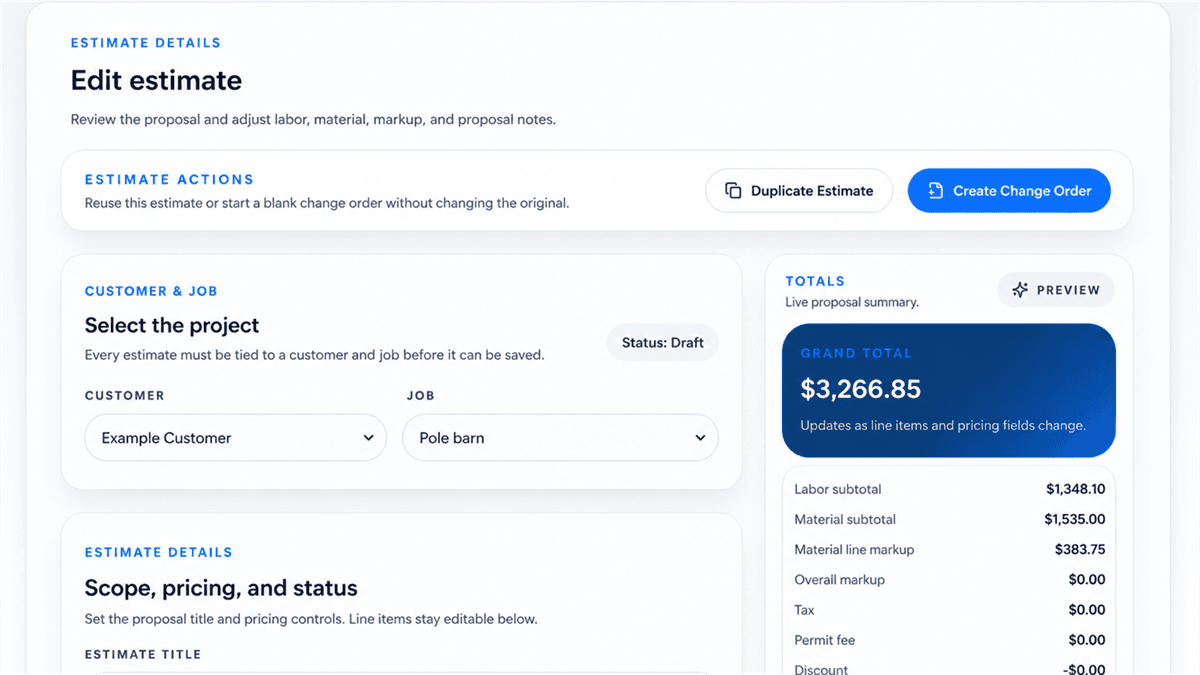
A strong estimate is more than a total. It should help the contractor verify scope, labor, materials, assumptions, exclusions, and customer-facing notes before anything is sent. PhaseBid is built to support that contractor-reviewed process.
Example estimate structure
| Section | What to capture |
|---|---|
| Customer and job details | Customer name, site address, job type, contact details, access notes, and schedule constraints. |
| Scope of work | Clear description of included electrical work, fixture/device counts, equipment, panels, circuits, and required coordination. |
| Labor | Task-based labor lines with hours, crew assumptions, service call time, setup, cleanup, and review notes. |
| Materials | Major material categories, quantity assumptions, pricebook items, allowances, and supplier or field notes where applicable. |
| Assumptions and exclusions | Access conditions, permit handling, drywall repair, utility coordination, unknown existing conditions, and owner-supplied materials. |
| Proposal notes | Customer-facing explanation, payment terms, timeline notes, and any requirements that must be confirmed. |
Review checklist before sending
- Confirm the estimate matches the actual site conditions and customer request.
- Verify pricing, labor hours, markup, tax, permit fees, and material quantities.
- Check local code requirements, inspection needs, utility coordination, and permit rules.
- Make sure exclusions are clear enough to prevent misunderstandings.
- Convert only the reviewed estimate into an electrical proposal.
How PhaseBid helps
PhaseBid helps contractors turn walkthrough notes into an AI-assisted estimate draft, keep the estimate editable, connect it to the customer and job, and export a professional proposal PDF after review. It is electrical estimating software, not a replacement for contractor judgment.
Try the workflow
Build an editable estimate, review the details, and preview the proposal PDF in a free PhaseBid workspace.
Contractor disclaimer: This resource is general estimating workflow information, not electrical, legal, pricing, or code advice. Always verify pricing, labor, material quantities, site conditions, scope, permits, and local code requirements before submitting a bid or purchasing materials.